
Skip to Content
Search Exit

Author Archives: Test Devices

  1. Why Choose a Full Service Semi-Finish Manufacturer?

    Leave a Comment
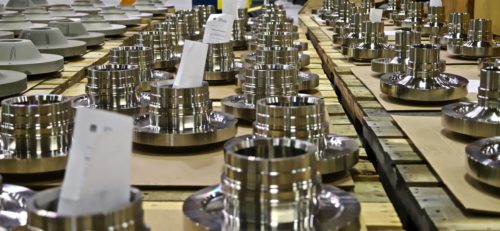
    Test devices semi finish rotating disk

    Full-Service Manufacturing: What Makes Us Unique?

    Through our extensive knowledge and expertise in rough and semi-finish manufacturing, we are able to give our customers the highest quality rotating parts making us the industry leader in this category. While success in these areas does require a dedicated team, what makes Test Devices unique is our combination of experts with our suite of on-site resources. 

    Other facilities can surely spin and shape products, but more importantly we are equipped with the best engineers, operators, and equipment that can handle the unexpected inevitable challenges that arise in machining. With our versatile staff and top of the line equipment, at Test Devices, we have the capabilities to execute:

    The Attention You Deserve

    Our staff is nothing short of thorough, detail oriented, and personable. In a fast-paced environment with changing schedules, specifications, delivery schedules, and rotating points-of-contact, we understand that change is inevitable, and we need to be able to work quickly and efficiently.

    Where we stand out among the rest is our ability to adapt to our customer’s needs. We stay engaged in personal and frequent contact, ensuring that feedback is not missed and capturing our customer’s needs and any changes along the way. Our production management will ensure part shipments are made on a day to day basis, while continuing to develop and maintain relationships with our customers and meeting their demands. 

    No matter how urgent the request, our customers know that at Test Devices we will respond quickly with actionable steps, as we understand these changes could have an effect on our manufacturing and delivery schedule. 

    Experts on Materials

    With our staff of highly trained experts, we cover a vast amount of knowledge when speaking about rough and semi finish machining of complex alloys and critical rotating parts. At Test Devices, we routinely provide finishing for the following:

    • Heat-resistant super alloys
    • High-nickel content aerospace superalloys
    • Precision critical rotating components
    • Parts within tolerances of (+-) 0.0005”
    • High-precision geometric shapes from rough forgings

    Our Proven Commitment
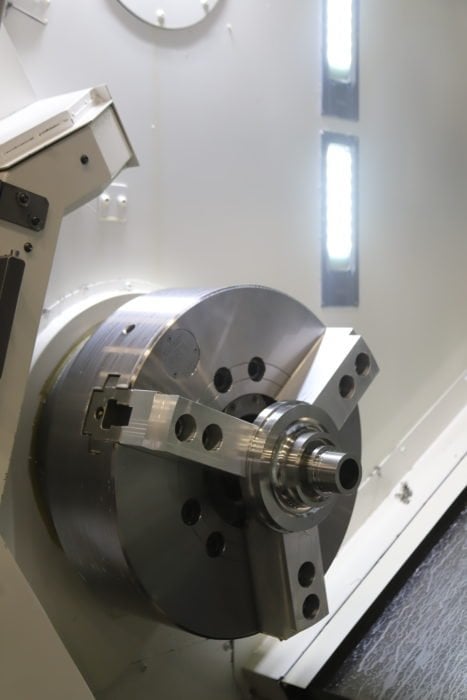
    rotating disk manufacturerDriven by our commitment to provide high quality services and products and dedicated customer service, our expert staff will see any challenge to the finish line. 

    After several years of successfully providing pre-finished parts to one of our customers, a major aerospace manufacturer, Test Devices experienced an increase in un-spinnable parts. After completing a detailed and thorough inspection of the machinery, our team was able to identify the problem which was determined to be a change in machining setup by the customer. We were then able to make the professional recommendation and solve the issue.

    A second example involved an issue during spin testing for a leading manufacturer of centrifugal impellers. Similar to our first example, after years of successfully delivering parts to our client, we encountered an issue when we realized a handful of parts were unbalanced. After the inspection of the machinery, we were able to determine the issue at hand and successfully resolve it. 

    Why You Should Choose Test Devices

    Partnering with us not only provides you with the benefits of our extensive experience and dedicated team, but you will also be working with a team who keeps quality, safety, and continuous improvement at the forefront of our business. Customers want to work with TD because of our focused approach on the most demanding manufacturing requirements, whether it be spin testing, semi-finish machining, or other critical processes.


    To read more about our entire rough and semi-finish machining services all under one roof, click here or on that picture to get your free copy of our eBook “Unparalleled Value: The Benefits of Our Rough & Semi-Finish Rotating Disk Machining Services now.


  2. Success for the HQ-1 Spin Test System

    Leave a Comment

    Shops and factories need to regularly test rotors to ensure excellent performance and adherence to design or production requirements. The HQ-1 Spin Tester is a purpose-built bench that incorporates all basic spin testing.

    HQ-1 is designed for manufacturing environment, and most suitable for spin testing:

    • High-speed electric motor armatures
    • Small gas turbine disks and bladed disks
    • Turbochargers & turbopump rotors
    • Electronics: Munition fuses and sensors
    • Centrifuge wheels

    The HQ-1 Spin Tester is an efficient, cost-effective option for facilities that need in-house, high-quality spin verification.

    HQ-1 Spin Test System Overview

    Test devices spin rig in facility with computers in foreground

    Our HQ-1 Spin Test System offers the following components and capabilities:

    • Compact design: The skid-mounted device can fit in a 10′ x 5′ x 6.5′ envelope for easy transportation and maneuvering.
    • Ease of use: The wheel mounting arbor fits multiple exchangeable adapters so facilities can test a variety of equipment with the same unit.
    • Drive system: The system’s default drive device can run up to 100,000 RPM as a baseline speed. Our team can provide higher speed drive options upon request.
    • Turnkey solutions: The HQ-1 Spin Tester offers plug-and-play installation, easy integration, and ERP and IoT connection capabilities.

    The HQ-1’s user control system makes the device easy to operate. The interface is intuitive and has manual, semi-automatic, and automatic settings. Facilities can create pre-programmed spin cycle sequences for routine testing with built-in safety and diagnostics.

    The device can be operated with an optional touchscreen interface. This offers menu-style setup, one-push operation, and barcode scanning to activate specific test sequences. Test Devices can also enable spin test systems with upgrades for remote control and monitoring for more customizable usage.

    Safety

    Spin tests generate significant speed and force. To keep workers and adjacent equipment safe, we build our spin test systems to exacting standards. The test chamber of the HQ-1 Spin Tester has a high-strength containment shell made from steel, is fully enclosed and includes a safety door for the operator.

    We also outfit the chamber with multiple safety interlocks to protect against malfunction and abnormal machine behavior during operation. The system performs self-diagnostic tests, monitors its operation and keeps an automated log of alarms.

    The vibration monitoring system in the drive unit adds another layer of safety against potential and serious hazards in the high speed testing. The system detects abnormalities and interrupt the spin operation  preventing the operators from being exposed to a potentially hazardous rotor behavior. T

    Contact Test Devices to Request a Spin Test System Today

    Spin testing is a step to evaluate the quality of rotating parts in manufacturing, repair, and operation. The HQ-1 Spin Tester is a purpose-driven tester that includes a fully-sealed testing chamber with a robust containment, a easy to use operator interface, and dependable in-built monitoring and safety features.

    Test Devices specializes in creating high-quality testing equipment to keep your facility safe and ensure you deliver high-quality finished products. We’re the leading experts in both spin testing and balancing services, and our company is ISO 9001:2015 and ASD9100D certified. Request a quote here for more information on an HQ-1 Spin Tester for your operation today.

  3. Protect Turbines & Engines with Subscale Turbine Particle Test Rigs

    Leave a Comment

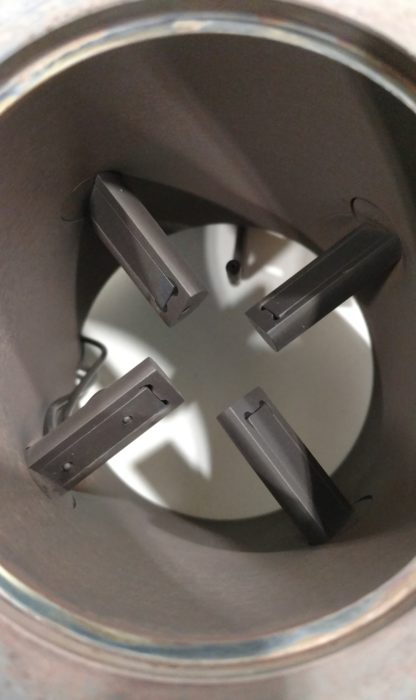
    test-devices-turbine-particle-testSolid particulates—such as sand, volcanic ash or airborne pollutants produced through the burning of fossil fuels—pose a significant risk to power turbines and jet engines employed in the industrial, commercial, and military sectors. Whether natural or manmade, these contaminants can severely impact the performance and durability of these systems and, in some cases, cause damage and subsequent failure.


    test-devices-turbine-particle-erosion

    Once inside the turbine flow path, depending on the temperature, the particles could cause different type of damages to critical operating components. For systems regularly exposed to dust and other solid pollutants, understanding the sources and mechanisms of particle-related damage is essential for engineering an effective solution to mitigate the problem and maintaining long-term optimal performance. These necessities are especially relevant due to the increasing number of military and aviation operations occurring in dry dusty environments, as well as the increased incidence tied to the presence of the volcanic ash dispersed in the flight altitude.

    Particle testing is one of the most critical steps in identifying and evaluating these potential pain points. This blog post outlines the basic principles behind the testing procedure and the testing capabilities offered up by Testing Devices, Inc.


    Fundamentals of Turbine Particle Testing

    test-devices-turbine-particle-test

    All gas turbines take in large amounts of air and are therefore at risk of particle damage. The danger is present whether the turbine is land-based or airborne and whether or not it has a filter, as even the most advanced filters cannot contain extremely fine particles of dust or ash.

    Subscale Turbine Particle Test Rig uses a purpose-built test setup to assess a durability of a turbine parts to handle these anticipated rigors before it is actually exposed to them. The goal of the test is to understand how a given contaminant entering the turbine could interact and manifest into a damage. The information that’s key to predicting and preventing catastrophic failures. Early, accurate particle testing is especially valuable as different particle types, chemical compositions, and operating environments cause different reactions and issues within the system. For example, the operating temperature affects the phase of the particulate hitting the blade surface, which determines whether erosion or deposition occurs.

    After conducting a particle test, an engineer gains a comprehensive understanding of how his or her component may react to these likely environmental stressors, making it an essential step in the design process.

    Key Test Rig Capabilities

    At Test Devices, Inc., we specialize in subscale stimulations that are fully adaptable to a wide range of test environment conditions. Our testing rig boasts the following capabilities:

    • Max flow velocity: 370 m/s
    • Demonstrated flow temperature: over 2400º F
    • Overall exhaust mass flow rate:6 kg/s
    • Particle feed rate:2, 0.5 grams/s, and higher

    Within these constraints, we work with our customers’ teams to generate actionable data that inform future revisions and production choices.

    Test Devices: Leading the Industry in Performance Testing

    As the demand for air transportation grows and the aircrafts venture into harsher conditions, there’s ample demand for customizable particle testing that can account for all critical environmental factors. At Testing Devices, Inc., we offer state-of-the-art testing rigs and services designed for maximum precision and control.

    Request a Quote and speak with our team about your ingestion testing needs today.


  4. Optical Strain Measurement: What to Know

    Leave a Comment

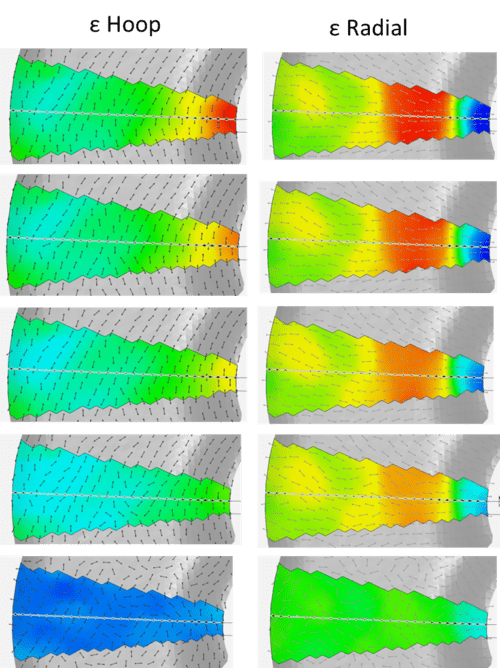
    Optical strain measurement is a non-contact measurement technique that employs digital image processing principles. Compared to traditional strain measurement methods, this technique provides a more streamlined solution for testing operations. The increase in testing efficiency is due largely to the elimination of the need for the modification of parts for lead-wire routing and sensor attachment. 

    Optical strain measurement offers engineers insight into strain behavior by providing a detailed map of the strain field. This is in direct contrast to more traditional measurement methods, which rely on single-point measurements with only presumed correlations to analytical model measurements.

    Essentials of Optical Strain Measurement

    Optical-strain-measurementDespite having existed for a number of years, it is only recently that the utilization of optical strain measurement techniques on a regular basis became practical. This change is largely attributed to the technological advances in the realms of computation power and digital imaging. Significant enhancements to these technologies allowed them to meet the requirements for the image processing-based measurement techniques on which optical strain measurement relies.

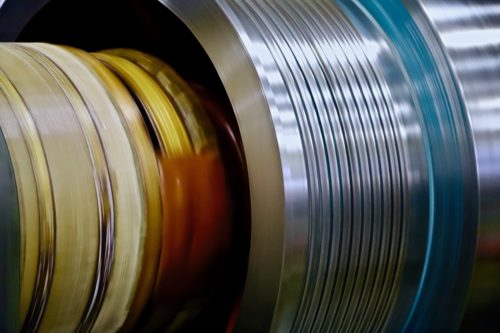

    A wide variety of strain mapping methods have grown in popularity over the past several years. These techniques determine a part’s surface strain by observing how patterns printed on the part’s surfaces move during deformation. 

    At TDI, we developed a Rotor Optical Strain System (ROSS) to facilitate optical strain measurement procedures. Using the ROSS, our team targets an area on the test rotor’s surface and marks it with a distinct engineering pattern. The use of this pattern, combined with our proprietary de-rotating system for image capturing, makes it easy to calculate strain via a digital image correlation (DIC) technique—i.e., an experimental technique that measures stress-stain. 

    Benefits of Optical Strain Measurement

    As optical strain measurement utilizes digital image correlation (DIC), it presents several significant advantages over other methods, including:

    • More comprehensive insight into strain behavior. Rather than relying on single-point measurements, this method provides engineers with a more detailed strain field map that offers a fuller picture of the strain field and structural performance of the tested product. 
    • More reliable measurements. Optical strain measurement eliminates the need to assume correlations between actual measurements and measurements from the standard analytical model that is typically required for single-point measurement techniques.
    • Less need for parts modification. As a non-contact technique, optical strain measurement eliminates the need to accommodate lead wires, strain gages, and slip rings. This elimination saves on parts cost and allows engineers to modify, inspect, or reconfigure tests (e.g., swapping turbine blades) with ease.
    • Less risk of unexpected failure. As this technique eliminates the need for strain gages and lead wires, it reduces the risk of measurement failure due to component failure and increases the likelihood of collected data maintaining its integrity.
    • More potential for future applications. On the whole, optical strain measurement offers a much greater degree of applicability than alternate measurement techniques. The necessary equipment can easily be set up in stand-off positions; this, in turn, allows for strain measurement even under extreme environmental or operating conditions (e.g., high temperatures).

    While optical strain measurement has been used for well over a decade on static components, applying the process to high-speed rotation components is relatively new. That’s why we seek to improve measurement technologies to position optical strain measurement as a cost-effective tool for a bevy of high-speed testing and production applications.

    Test Devices’ Optical Strain Measurement Services

    At Test Devices, we’ve developed an application for the optical strain technique for high-speed rotating parts. Our work on this innovative and forward-thinking process presents a clear opportunity for our clients. 

    Interested in partnering with Test Devices, Inc. to learn more about your parts’ capability and performance? Looking to weed out weak components and strengthen the parts you rely on in your industry and application? Request a quote today to find out more about our optical strain measurement services.

  5. Industrial Applications of Spin-Testing and Balancing

    Leave a Comment

    Precision testing of high-speed, high-performance motors and rotors is of paramount importance in today’s aerospace, automotive, and defense industries. 

    Spin testing is performed to validate the design, durability, balance, and structural integrity of the motor. The material and structural behavior of the rotor, which ties to the efficiency of a machine, is of major import across the many varied applications of electric motor technology, ranging from UAVs and UAMs to hybrid and electric vehicles. Industries that depend on high-speed rotating machinery rely heavily on test results to accurately predict how their technology will perform in real-world situations. 

    Applications of Spin-Testing

    spin-testing Proof and overspeed testing are standard for manufacturers of rotating equipment and turbomachinery. Simply put, overspeed testing validates the rotor integrity against the speed of the rotor to a rate far greater than what the component will encounter  in its operation. For example, FAA certification of aircraft turbines disk mandates overspeed testing before the engines can be used in aircraft. 

    There are myriad tests that may be relevant based on the specific type of rotor application. For example, rotors fabricated from a new materials or constitute a radically new designs are subjected to more rigorous testing to certify for relevant regulatory standards and operational safety requirements, as well as gather as much data as possible about the effectiveness of the new technology. In this case, Test Devices could help conducting advanced spin testing to design and implement the test, and measure the critical data to evaluate the performance of the part. 

    At Test Devices, we possess a broad variety of spin testing capabilities suitable for various testing scenario, including:

    • Proof spin and overspeed testing for compliance
    • Rotor strength and material evaluation via burst test (with high-speed imaging)
    • Rotor durability and fatigue evaluation via LCF testing
    • Heated and thermal gradient test to capture the accurate material conditions
    • Rotor growth and profile mapping – Capture the material behavior under CF load

    Balancing

    Proper balancing is an essential step to ensure the reliable operation of any type of rotor. Even a small unbalance can result in problems ranging from unexpected rotor wear to catastrophic equipment failure. 

    balancing-services-test-devicesUnbalance is inherent in any real-life rotors. Even the minute variation within the manufacturing tolerances, and uneven distribution of material properties about the axis of rotation could cause the bias in the distribution of the CF load in a rotor that results in undesirable vibration. 

    In some cases, involving high-speed rotors, more complex scenario must be considered. Unexpected deformation of rotor due to the emergence of plasticity or shift in the internal structure of a rotor (e.g. winding settling in the motor armature) could result in an unintended unbalance. In such a scenario, the combination of both spin testing and balancing plays a critical role in identifying and resolving potential problems in the rotor.

    As such, proper balancing is a critical step to the successful function of rotating components. An unbalanced condition can be very hazardous and may result in severe damage to machinery, threaten the safety of equipment operators, and drive up costs due to redesigns.

    Spin testing and balancing plays a critical role in ensuring the safe and reliable operation of the final component, ensuring its integrity and reliability – optimizing the performance and extending the machine’s useful life. 

    Advanced Spin Testing Services from Test Devices

    Test Devices has more than 40 years of experience in advanced spin testing practices. Our state-of-the-art equipment and highly trained staff of engineers and technicians offer innovative solutions to the challenges facing designers and manufacturers of rotating components.

    We can help you optimize your designs and accelerate your development and production process by providing you with all the relevant test data that you need.

    Contact Us today for more information about our spin testing services or to discuss your design with one of our experts.

  6. Test Devices Afterburner Small Jet Engine Test

    Leave a Comment

    The advancement of jet engine technology is directly tied to the pursuit of a hotter core, which continuously pushes the need for superior high-temperature materials, coatings and sensors.

    Testing nascent material and components in highly relevant conditions, and generating data, especially in the earliest phase of development work helps engineers and scientists to bridge the “information gap”.

    Test Devices’ subscale jet engine rig is now available with 2000+F gas temperature capability. Learn more about our subscale jet engine testing services in our eBook, The Importance of Subscale Jet Engine Testing.


    Download Your Copy >>

  7. Test Devices Improves Overall Production Capacity

    Leave a Comment

    In-House Machining Capabilities

    At Test Devices, Inc. we’ve made dramatic improvements in production capacity. We are not only producing more, but we’re also doing it faster than ever before. Along with dramatically shorter lead times, record production, and a plan for continued growth and improvement, here’s an outline of exciting developments at Test Devices.

    Test Devices Improved Production Capacity

    To appreciate our remarkable growth in production, you just need to look at the numbers. In the first quarter of 2017, we shipped 480 pieces. By the same time in 2018, that number grew to 915, and in 2019 it has more than doubled to 1,873 parts. Our capacity has continued to increase in the last four months, and we are poised to hit a new record high of 800 pieces a month.

    One of the ways we have expanded production capacity, and speed, is with our new and expanding machining operations. Previously, we had to outsource forging machining to other facilities. Transit time and queue times added significant delays, which added considerable time to projects. With our enhanced and growing machining capabilities, we’ve eliminated those delays. Parts go through machining, to spinning, with improved velocity.  This has enabled us to achieved a same-day turnaround in some cases.. We’ve also added balancing equipment, and our post balance spin testing allows us to prove out the balancing operations. We are capable of pre-spin  machining, spinning, and post-spinning machining, all in-house, so processing is more efficient than ever. 

    Another boost to our growth is the group of talented post-graduate engineering students we work with. Through this partnership, we provide them with the opportunity to begin their career in aerospace. They join us to learn the business from the ground up, and their detailed knowledge of our operations helps them seamlessly move into the engineering side of the company. This gives them concrete knowledge about our operations before they dive into the intricacies of the aerospace industry.

    Our ability to manage larger volumes, in less time, means we can serve customers as they grow. This eliminates the need for customers to line up second or third backup supply houses, making their process simple and streamlined with one vendor. We’re not only helping our current customers with quick turnarounds, and increased production volumes, but we are also reaching out to new customers to expand our business.

    All of this adds up to an incredible work environment where the atmosphere is positive and collaborative. Our team works together efficiently and enthusiastically to continue our forward momentum.

    Test Devices’ Services and Capabilities

    We’re excited about all the services we provide at Test Devices. Our precision balancing machines are state-of-the-art and handle as much as 450 lbs. We offer specialty machining with an efficient and fully equipped machine shop. We specialize in developing products to tight tolerances of plus or minus 0.0001” for balancing and spinning. Our high precision production machining capabilities continue to expand. Most recently, we installed two Okuma LB45 horizontal lathes, which are capable of 25” turning. We also invested in a Toshiba TUE-15 vertical turning lathe, which is capable of 70” turning.

    With a team of expert inspectors, we provide advanced dimensional inspection with top-of-the-line equipment to ensure our machinery is up to strict standards. Our two Zeiss Contura scanning coordinate measuring machines enable us to evaluate machinery to accuracies of 0.18 microns. 

    Our experienced technicians and seasoned engineers make us uniquely equipped to manage and support your projects. The combined expertise means we can nimbly address problems and ensure quality, timely production. 

    Contact Test Devices for Quick Turnaround on Machining Projects

    Test Devices has invested in new capabilities and a stellar team. With these improvements, we are ready for more volume and new customers. We’re proud of the quality production, shorter lead time, and the excellent communication we offer. For more information about our services or to request a quote, contact us today.

  8. Spin Testing Additively Manufactured or 3D-Printed Parts

    Leave a Comment

    Additive manufacturing (AM) is the process of building 3D workpieces layer by layer. Rather than traditional processes such as machining, which create forms by removing the material from stock material, additive manufacturing “prints” layers into a part from a computer model created with Computer Aided Design (CAD) software.

    The AM technique has been around for some time. With recent advancements in technology, it has been gaining more popularity and relevance. The AM techniques are also known as:

    • 3D Printing
    • Rapid Prototyping (RP)
    • Direct Digital Manufacturing (DDM)
    • Layered Manufacturing
    • Additive Fabrication

    With the ongoing improvement on the quality of parts made with AM method, it is also becoming increasingly cost-effective. Many industry leaders believe that AM will soon become an integral part of new products and future manufacturing processes. AM technology is in the midst of a revolution, and manufacturers continue to see new benefits from new methods as they enter the market.

    Why 3D Print High-Speed Rotor Parts?

    Leading turbomachine OEMs are looking into a possibility of additively manufacturing high-speed rotor parts. Within the AM technologies for printing metal parts, one of the immediate areas of application for the AM parts is the replacement of (or enhancement of) traditionally cast parts.

    There remain many challenges ahead of where we are today. Many manufacturers have begun to weigh the benefits of additively manufacturing the rotors with airfoils, cooling channels, and many intricate features. The potential benefits of AM for OEMs include:

    • Equivalent or stronger than min-property cast parts
    • Consolidation of multiple parts – Reduced manufacturing cost
    • Enabling new designs which cannot be made with traditional manufacturing techniques

    GE and other industry leaders have waylaid some of these concerns by building functional turbine engines using 3D printing. The electron beam from one machine can fabricate many static engine parts, and recent demonstrators showed a possibility to manufacture a blade from titanium aluminide powder, a material so brittle that it could previously only be fabricated using expensive molding processes.

    Along with challenges in achieving higher dimensional accuracy and better surface finish, one of the challenges in additively manufacturing a high-speed rotor is that the parts must be reliably made and validated. It is understood that the AM process has not resolved the problems related to internal defects such as material porosity, discontinuity, and directionality.

    High-Speed Spin Testing is Critical for Development

    Test Devices (TDI) has been spin testing cast rotors for years. With the emergence of additive manufacturing, we are starting to work with some customers to spin test their rotors. High-speed spin tests can be used to stress the parts and verify their structural integrity.

    Looking further, TDI is evaluating the benefit of pre-spinning the casted or additively manufactured rotors to achieve the following benefits:

    • Stabilizing the material and minimizing the in-operation change in unbalances
    • Application of pre-spinning process to the rotors to bake-in advantageous residual stress state
    • Improving engine efficiency through controlling the rotor growth behavior and improving tip clearance

    Spin Test Additively Manufactured Rotor Parts with Test Devices, Inc.

    TDI continues to look into advancing and improving our spin testing technologies and services. We strive to be your “One-stop Shop” and offer comprehensive services to meet your spin testing and manufacturing needs (pre-spin, pre, and post-spin machining, balancing).

    TDI offers fully compliant operation in accordance with AS9100/ISO9001 (+ OEM QPR) certified processes, backed by the demonstrated capabilities:

    • Handling high-volume loads of 6,000+ units
    • Managing 30+ manufacturing spin operations consisting of different parts of varying designs and sizes
    • Fast turn-around and guaranteeing high-quality work achieved by in-house inspections/quality assurance, machining, and balancing capabilities

    Spin testing can contribute to enhancing the safety and the performance of additively manufactured rotors. Contact TDI today to learn more about spin testing 3D printed parts.

    Download Your Copy Here >>
  9. Spin Testing for Manufacturing 101

    Leave a Comment

    In the quest to produce stronger, more durable, and cost effective rotating parts, manufacturers are turning to spin tests to help achieve these goals. Spin tests for manufacturers can be used to validate the stability and integrity of a part, or to enhance the desirable properties of the material. We will explore the differences between traditional spin testing and spin testing for manufacturing purposes. We will also discuss the benefits of spin-testing your rotating parts, the subtle but important factors necessary to run successful manufacturing spin operations, and the importance of finding the correct spin testing service provider for your specific needs.

    Jet engines, power turbines, turbochargers, electric motors — all of these high-speed rotating parts are critical for a wide range of modern high-performance machines and key infrastructures. In order to ensure optimal reliability, durability, and quality, these components must undergo rigorous engineering and testing processes.

    Spinning at high speed, a machine part, such as a jet engine disk, stores a significant amount of rotational kinetic energy. In the event of a part failure, this stored kinetic energy is released, and the end result can be catastrophic. To prevent this, a spin test is conducted to evaluate the structural integrity and robustness of high-speed rotating parts. The data collected from this test allows engineers to better understand rotors’ failure behavior and improve the design as needed. Introduced more than half a century ago, spin testing techniques have been integral to the evolution of high-speed rotating machines.

    While there are a variety of spin tests available, most of them can be grouped into one of two major categories: Spin Testing for Research and Development and Design Validation, or Spin Testing for Manufacturing.

    Spin Testing for R&D and Design Validation

    • Custom-designed engineering tests used to validate the rotor design and/or certify the part
    • Typically involve a prototype, first article, or purpose-designed test rotor assembly
    • Design, build, and execution of the test should be carried out as a carefully managed engineering project
    • Test rig designs aim to maximize measurability of engineering data, and create realistic conditions during the test to simulate the relevant operating environment of the machine
    • Some examples of R&D and Design Validation spin testing include: Overspeed Certification Tests, Low Cycle Fatigue (LCF) Tests, High Temperature and Thermal Gradient Spin Tests, and Dynamic Spin/High Cycle Fatigue (HCF) Tests

    Spin Testing for Manufacturing

    • Involve processing batches or a large volume of parts to specified operation and inspection steps
    • A quality-controlled manufacturing operation is streamlined to produce consistent, quality products
    • Timeliness, quality, and efficiency are the key drivers of a successful manufacturing spin operation

    Achieving Repeatable Success in Manufacturing Spin Tests

    While manufacturing spin tests may appear simple and uninvolved in comparison to the more complex and sophisticated R&D spin tests, the success and usefulness of all tests depends on the expertise of the team you choose to partner with. Experienced technicians and engineers will have carefully planned quality processes in place to ensure smooth testing and reliable results.

    In order to deliver products to customers’ specifications both cost-effectively and on time, manufacturing spin tests must make use of robust, high-quality manufacturing systems capable of achieving success over thousands (and sometimes millions) of iterations. In order to achieve this repeatability, a holistic approach that considers the details of each step in the operational workflow must be employed.

    Manufacturing spin tests can be further broken down into two categories:

    1. Overspeed Test

    Overspeed tests are conducted to validate the stability of rotor balance and part integrity in a high-speed environment. Final machined parts, such as turbocharger impellers and turbines, are spun to a customer specified rotational speed to validate the parts’ integrity.

    1. Forging Pre-Spin

    The forging pre-spin method involves a material conditioning process for aero-engine and power turbine disks. Semi-finished or un-machined forgings are spun to a specified speed to yield the material. There are several benefits of pre-spinning forgings and disks, but typically this work is done to enhance the stability and durability of the material and final products. Forgings are carefully inspected and monitored at each step of the pre-spin process to ensure proper material conditioning.

    Manufacturing Spin Operation at a Glance

    1. Inspection: Examine the parts for any damage or anomalies; some customers also require part inspections for dimensional conformance
    2. Assemble the part with spin tooling
    3. Check rotor balancing, and perform corrections if necessary
    4. Perform a spin test; monitor rotor balance and rotor dynamic stability over the test speed
    5. Record and report the result
    6. Disassemble the part from the spin tooling
    7. Perform post-test inspections, and ship the part to the customer

    Specific to forging pre-spin operations, customers also often require a “pilot run” during the earlier phase of process implementation; the pilot run is typically performed prior to launching a full-scale manufacturing spin operation. A series of pre-spin tests is performed to validate the tooling design performance and try out the handling equipment, operational processes, and documentation flow. These pre-spin tests also allow clients to confirm the material behavior (forging growth to a speed).

    Several factors can disrupt successful pre-spin operations, however, including:

    Spin testing circular image

    Poorly Designed Spin Tooling — Performing an efficient, repeatable operation requires well-designed tooling and handling equipment. Poorly engineered spin tooling can lead to unstable rotor behavior, rotor dynamics issues, and limited reusability in the tooling — ultimately resulting in incipient, recurring issues in pre-spin operation. Successful spin tooling design depends on:

    • Tooling and handling equipment design performed by an experienced engineering team that understands the ins and outs of spin operation.
    • Years of experience designing and routinely testing different types of spin tooling for different test disks.
    • Comprehensive engineering work, from the selection of suitable materials to detailed stress and dynamics analyses of the rotor assembly. Careful engineering ensures reusability and high performance of the tooling in the manufacturing environment.

    Balancing and Severe Vibration Issues — A critical step in rotating machine construction, proper rotor balancing helps ensure no time is wasted troubleshooting rotor dynamics and vibration issues. –

    • Balancing is often overlooked and performed without a real understanding of its importance. Specific to pre-spin operations, the forgings coming off the production line typically have unfinished contours and are often severely unbalanced. Adding extra steps for machining and balancing forgings, however, results in added costs and downtime. In some cases, forgings may not be able to be easily balanced. (TDI’s high-performance damper system is specifically designed to manage vibration and rotor instability problems.)

    Bad Quality Processes and Material Handling — For professionals working within the strict requirements of the aerospace standard, quality processes must be kept in mind throughout the entire operation. Here’s what to look for when sourcing for aerospace standard processes:

    • Services based on the AS9100/ISO9001 quality standard, backed by experience with leading aeroengine OEMs.
    • A culture of quality that ensures every step of the spin tooling process is performed to stringent standards. Through closely monitored parts tracking and receiving to meticulous inspection and pre-spin work, there should be a guarantee that all processed parts are of the highest possible quality and reliability.
    • Highly trained staff, state-of-the-art spin rigs, CMM machines, and climate-controlled inspection rooms.
    Spin testing set up

    Inaccurate Speed Measurement and Control — Measuring and controlling rotational speed is critical for successful spin test operations, but this step is also often overlooked.

    • Inaccurate speed data and spin test operational records can lead to catastrophic field accidents. Whether done intentionally or unintentionally, rotors spun to an incorrect speed severely compromise the integrity of the parts and the machines.
    • In a nonconformance case with an exceeded speed target, the rotor may have sustained damage that is undetectable to inspectors.
    • In a nonconformance case with an undershot speed target, there are two likely causes: 1) The rotor was not tested properly to the requirement, or 2) The rotor may not have achieved the required material conditioning at the specified target speed.
    • Measuring, recording, and ensuring the accuracy of spin test speed is one of the most important steps in spin test operations, directly affecting the quality of the part. Plus, it’s very difficult and time consuming to examine the aftermath of an incorrectly executed spin test.
    Rotor burst test close up

    Rotor Bursts — Accidents can happen even in the most diligently planned and managed manufacturing environments. During spin testing, it’s important to take preventative measures to manage the risk of disk bursts, since rotors spinning at high speeds store a large amount of rotational kinetic energy that can be released in the event of a part failure, leading to catastrophic damage.

    • The first priority in managing the risk of a disk burst is ensuring optimal safety. Spin pit containment alone is not enough; facilities must take necessary measures to protect spin pit operators and surrounding equipment from unexpected containment failures. Ideally, spin pits should be placed in a purpose designed test cell with a separate operator room so that workers are not at risk.
    • Downtime in any manufacturing process can cause client dissatisfaction and added expenditures, so it’s critical to establish a practical contingency plan that will allow you to quickly respond to and recover from accidents, should they occur.
    • Specific to forging pre-spin work, operators should carefully manage the risk of disk bursts. Forgings are heavy and typically spun to a relatively high speed, which means they can cause great destruction in the event of a burst.

    Learn More

    For over 40 years, Test Devices Inc. (TDI) has been a leading provider of spin testing services and equipment, developing and advancing the science of centrifugal, vibratory, and thermal stress testing. Whether you’re interested in setting up your own manufacturing spin operation or looking to outsource the work, you’ll need a dependable partner to ensure optimal performance, quality, and reliability.

    Since first introducing pre-spin testing services to our range of capabilities ten years ago, TDI has become a trusted partner for various leading OEMs in the development, innovation, and implementation of their pre-spin operations. As a leading expert in spin testing and related applications, our team has a deep understanding of the many small details that can affect successful pre-spin operation design and implementation. Our equipment designs and engineering solutions embody 40 years of pragmatic innovation gained from hands-on experience performing spin tests and industrial spin operations in forging pre-spin work:

    • TDI offers a high-performance drive control system built based on the latest PLC technology and TDI’s 1160 Precision Digital High-Speed Tachometer. The 1160 tachometer, built on a 16-bit digital technology platform, allows for fast and reliable speed measurement — thereby ensuring accurate control of rotors in high-rpm spin operations.
    • TDI has performed numerous burst tests for different types and sizes of rotors. With years of experience and an accident-free record for many decades, we’re proud to offer the industry’s most robust risk mitigation services against high-energy disk bursts.

    For help designing a facility, production processes, and spin tooling, contact us today. Our team can provide the necessary training and expert assistance needed to implement a highly successful operation.

  10. Expanding Capacity – Balancing Services

    Leave a Comment

    Rotating components such as jet engine disks and high-speed motor armatures must be balanced well to warrant a good performance and overall longevity of machines. Balancing machines pinpoint the exact amount and the location of unbalance in rotating components. Once these areas are identified, skilled technicians correct the unbalance level by either removing material in heavy areas through drilling, milling, or other processes or by adding mass (weld or bolt additional material onto areas that are too light).

    Unbalance resulting from eccentricities between the center of the rotor’s gravity and the axis of rotation causes the heavier side of the rotor to exert more centrifugal load. The unbalance in the rotor often directly impact the levels of noise, vibration, wear, and leads to significant reduction in service life of the equipment. In some applications, unbalanced rotors are even considered to be a safety hazard if machine failure can result in personal injury or property damage.

    New Updates for TDI’s Balancing Machines

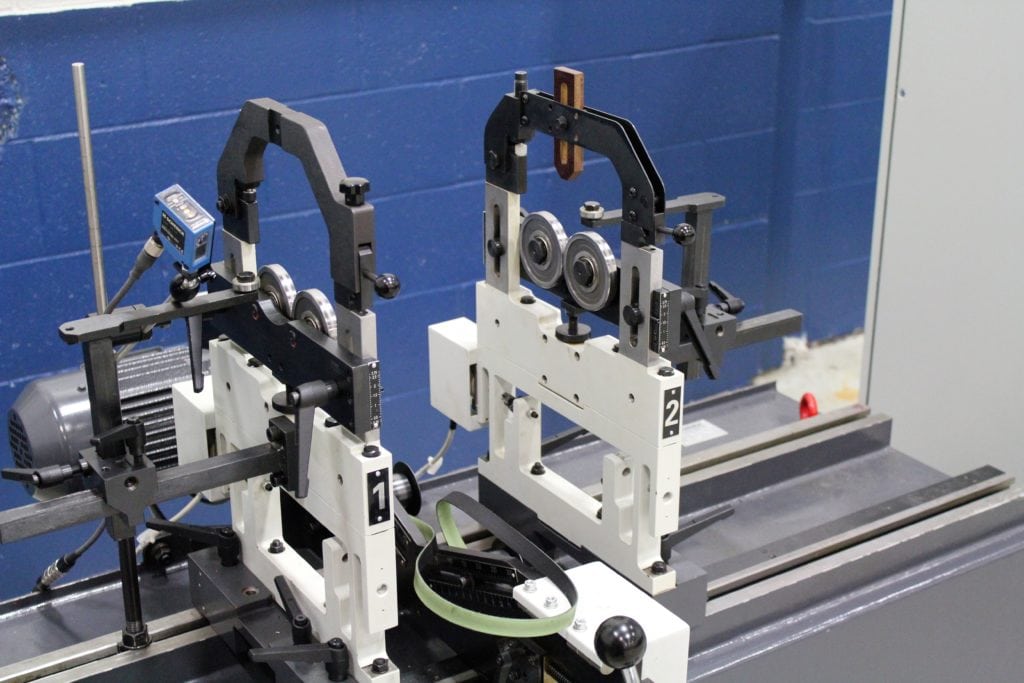
    For the past four decades, Test Devices Inc. (TDI) has provided customers with an extensive range of rotor engineering services, including diagnosing and resolving various balancing issues. In an effort to meet growing consumer demand and reinforce our commitment to providing the most accurate rotor balancing services, we’ve expanded our balancing capabilities by acquiring a new HM 20 Schenck Horizontal Balancing Machine.

    This state-of-the-art machine represents the latest in rotor balancing technology. One of the main benefits of the HM 20 is its hard-mounted bearing design, which ensures rapid changeovers between rotors. This feature allows us to handle significantly higher volumes of balancing jobs without compromising the quality and repeatability of the work, and increasing the efficiency of our operational capabilities.

    Additionally, the HM 20’s modular design makes it easy to modify the setup for a wide range of components by using various purpose made attachments. These features increase the versatility of the balancing machine and allow us to meet the unique demands of customers regardless of industry or application.

    Differentiating our services, our balancing operation offers:

    • Accuracy & Precision: We address a wide selection of balance testing needs, including unbalance tolerances below ISO G2.5 specifications. We’ve developed distinct processes to ensure accuracy and repeatability of our balancing work, including studies and analytical method for asymmetric rotors.
    • The Facility: Our balancing machines are carefully set up, calibrated and maintained by experts so that they are properly calibrated and dynamically isolated. We have also set up a dedicated area to efficiently perform the various tasks involved in balancing work. We offer comprehensive options for balance correction methods ranging from simple dremel to precision CNC machining.
    • Quality: We offer full inspection services ranging from CMM dimensional checks, visual checks and manual measurement by experts. We follow AS9100 Aerospace Standards. All of our work is recorded and fully traceable. We also comply to various requirements to serve ITAR works.
    • Handling: We understand the importance of proper handling and protection of the critical features of customers’ parts. Our engineers will work with you to fully capture your handling requirements in the balancing operation. Our team can support your needs in design and provision of protective gears.
    • Engineering Support: In addition to balance correction services, Test Devices (and our parent company, Schenck) offers advanced technical support in designing customized balance toolings, fixtures, as well as offering engineering consultation on planning balancing processes and designing balancing features for your rotors. Dealing with balancing as an “afterthought” often results in an expensive problem.

    Balancing Services at TDI

    At Test Devices Inc., we offer a broad range of timely and cost-effective balancing services for virtually any size of rotor. Our advanced equipment (including the newly acquired HM 20 Schenck Horizontal Balancing Machine) will balance the most intricate and complex parts in the aerospace industry.

    Our services also include the design and manufacture of customized balance tooling to help produce unique and precisely balanced components.

    Our staff consists of highly qualified and experienced industry experts, engineers, technicians, and consultants who provide rotor balancing solutions in hundreds of challenging applications for world-renowned clients. We partner with Schenck, the experts in balancing, to combine their advanced technology and knowledge base with in-depth expertise and software support. We also work closely with our customers, analyzing each specific case to determine the best balancing methods and strategies.

    • Selection of a machine with the proper sensitivity for the component and balance requirement
    • Creation of robust controlled processes for production work to ensure repeatability from lot to lot
    • Accuracy improved by ensuring consistency of the setup (ie. Little details) and rotor specific calibration
    • Repeatability by using “master” rotors to ensure part specific configuration/calibration is correct and consistent
    • In-house true engineering capability to design of component-specific balance tooling that considers dimensions, tolerances and centerline error
    • Drawing upon our Schenck expert balancing colleagues to address unusually complex balancing requirements
    • Selection of appropriate material removal methods (milling/grinding) to address customer requirements
    • Utilizing trained balance personnel

    The Balancing Experts

    Proper balancing of rotors and other rotating components is essential to ensuring the efficiency, longevity, and safety of your machinery and equipment. Furthermore, a good balancing reduces your equipment’s maintenance requirements, eliminating the down time and costs associated with frequent repairs and part replacement.

    Although it’s relatively simple to diagnose an unbalanced part, careful selection of a balancing service provider is crucial to guarantee optimal results. At Test Devices Inc., our technical staff have seen it all and are willing to assist you with your balancing needs.

    If you would like to learn more about the risks of improper balancing and how you can avoid them, download our comprehensive eBook, Balancing 101, or contact our team today.

    Balancing 101 eBook

    Download Your Copy >>

Have any questions?

Click Here
X