
Skip to Content
Search Exit

Author Archives: Test Devices

  1. The Competitive Advantages of Working with Test Devices

    Leave a Comment

    Test Devices  provides our clients with leading spin and subscale jet engine testing, balancing services, and test equipment. If your application involves high-speed, rotating components, Test Devices is your one-stop shop for testing and servicing needs.
    We provide spin tests for manufactured parts and design validation and offer a variety of add-on services such as optical strain surveys and high-speed video imaging. We also offer subscale jet engine testing services with unparalleled capabilities—we test for key engineering concerns such as creep and fatigue, volcanic ash, coating durability, and more. 

    Our balancing services utilize precision machining to ensure that we provide exceptional quality assurance. All our test equipment – from dynamic and fatigue rigs to drive systems and beyond – is the product of nearly 40 years of experience. 

    Test Devices Services and Capabilities

    At Test Devices , we’ve designed our service portfolio with our clients in mind. We provide a full range of services to help our clients mitigate the costs and hassles associated with complex testing.

    Spin Testing

    Test Devices performs a variety of spin testing and rotor balancing services. We’re fully committed to supporting your critical engine part certifications, validating your designs, and improving your manufacturing processes. Our spin testing services include:
    • Overspeed testing
    • Pre-spin testing
    • Burst testing
    • Low-cycle fatigue testing
    • Dynamic spin testing
    • Thermal gradient testing
    • Overspeed certification testing (also known as proof testing)

    Subscale Jet Engine Testing

    We offer subscale jet engine testing for clients in the aerospace industry. Our proven methods offer an affordable, practical way to gather crucial test data on materials, coatings, or sensors for new engines in development.

    Balancing Services

    Precision rotor balancing requires very specific skills and expertise. The process may seem simple, but is far from it. Many other providers will lack the capabilities necessary to meet the strict and complex standards required by demanding aerospace applications. Our highly trained engineers possess the education and experience necessary to achieve complex balances within the strictest tolerances.

    Test Equipment

    Our team at Test Devices has developed the most precise, accurate, and efficient test solutions in the world. We only employ experienced and accomplished scientists and engineers, so our team is well-equipped to handle nearly any testing need.

    Test Devices : Your One-Stop Shop

    Our full range of solutions ensures that we will be a single-source provider for client projects. Our facility possesses the following:

    • Balancing

    Our state-of-the-art precision balancing machines offer capabilities of up to 450 lbs., ensuring that we can balance rotors of nearly any size.

    • Specialty Machining

    Our fully equipped, compact machine shop homes myriad machining and tooling options. We specialize in developing products to tight tolerances of ±0.0001″ for balancing and spin tooling.

    • Batch Production Machining

    We’ve installed two Okuma LB45 horizontal lathes capable of 25″ turning. We also possess a Toshiba TUE-15 vertical turning lathe capable of 70″ turning.

    • Advanced Dimensions Inspection

    Our expert inspectors use the most advanced equipment available to ensure that machinery meets the most demanding specifications. We have a climate controlled inspection room with two Ziess Contura scanning coordinate measuring machines capable of achieving accuracies of 0.18 microns.

    • Expert Testing and Production Teams

    Our seasoned team of engineers and expert technicians possess the capability to project manage and support your needs regardless of industry. Our combined expertise in engineering and building spin equipment, tooling, instrumentations, and quality production gives us a unique ability to expeditiously troubleshoot and debug problems. Our solutions will also be provided in the most affordable and timely manner possible.

    For more information on the team at Test Devices and how we can improve your bottom line, please download our eBook, “Unparalleled Innovation: Competitive Advantages of Working With Test Devices ”

    For more information on Test Devices  or our available services, please request a quote.



    competitive-advantages-test-devices-incTo read more about all these great benefits of working with us and more, download our most recent eBook

    Unparalleled Value: Competitive Advantages of Worthing with Test Devices today.

  2. eDrive Trends and Growth Potential for 2019

    Leave a Comment

    In recent years, electric vehicles have made a big impact on the mainstream automotive market. Consumers in more and more parts of the country are switching to zero-emissions vehicles as the risks and results of unmitigated climate change become more pronounced. Therefore, many automotive manufacturers are beginning to design, build, and sell electric vehicles, contributing to rapid growth in the EV market.

    Electric vehicles play a key role in shaping the economy of the transportation sector. As the demand for hybrid and electric vehicles continues to rise, consumers will eagerly fund through their purchases innovative new technologies that make these vehicles even cleaner and more cost effective to produce.

    The future scenario becomes even more persuasive when one considers the international community’s role in supporting these efforts. Leaders in the EU, China, and Japan are taking steps to incentivize the production and sale of electric vehicles, and they’re also introducing increasingly stringent regulations against gasoline engines. All these trends stem from the rising anxiety in response to climate change, of which fossil fuel–burning vehicles are a major contributing factor.

    Electric Vehicle Trends in 2019

    Electric vehicle technology has improved by leaps and bounds in recent years. Advances in this field have allowed these vehicles to match or even exceed the strength and versatility of traditional gasoline-burning vehicles. Electric motors can now support medium- and heavy-duty vehicles like trucks and buses, and they offer a host of other benefits previously reserved to gasoline-burning vehicles. 

    With year-to-year production increasing rapidly, manufacturers and consumers are starting to see the improvement in affordability of EV components and finished products. In fact, producing electric vehicles has become so affordable that many transit agencies are working toward a full conversion of their bus fleets to electric buses. 

    Public perception surrounding electric vehicles has shifted, too. Companies like Tesla have turned this once-niche market into a luxury power brand, and other automakers are starting to catch up. Additionally, many states and municipalities are incentivizing businesses to install car charging stations (or installing these stations themselves), increasing electric vehicles’ range and improving their utility as a tool for commuting.

    Future Forecasts by Industry Analysts

    Because they rely on the growing ubiquity of recharge stations, electric vehicles would be nowhere without the utilities that provide them with electricity. Energy Innovation modeling predicts that electric vehicles will account for 60–75% of new light-duty vehicle sales by 2050, and this will represent 13–15% of national electricity demand at that time. 

    A recent study by BCG details four factors that are expected to shape the transition to electric vehicles in the next decade:

    • Technology
    • Regulatory mandates
    • Consumer adaptation
    • Autonomous vehicles/ridesharing

    The study’s authors predict that internal combustion engines will continue to dominate for the next few years, but the years between 2020 and 2025 will see an exponential increase in the market share of electric vehicles as OEMs adapt to increasingly stringent efficiency and emissions standards. While BCG predicts the majority of consumers to switch to hybrid vehicles, they also expect battery electric vehicles (BEVs) to gain market share over 2025–2030 as the total cost of ownership of these vehicles continues to fall.

    Accenture has highlighted Europe, China, and the US as focal points for the coming mass-market adaptation of electric vehicles. Their electric vehicle market attractiveness index factors in political, economic, and technological information and advancements, highlighting these regions as having the strongest overlap between wealth, innovative potential, and regulations pushing consumers to adopt electric vehicles. 

    Test Devices’ eDrive Capabilities

    Test Devices is proud to contribute to the growth of electric vehicle manufacturing by offering a host of consulting, measurement, and equipment-based testing services to automotive manufacturers. We’ve led the field in providing realistic rotational testing systems and services for over four decades

    Some of our offerings include:

    • Test equipment
      • Rotor speed balancing 
      • Vertical spin test machines (to 160,000 RPM)
      • Coordinate measurement machine and dimensional inspection
    • Technical consulting
      • Test design consulting
      • Rotor dynamics analysis
      • Design for balancing and balance budgeting
      • Workshops and training
      • Design and manufacturing or custom interface tooling for spin testing and balancing
    • Spin test services
      • Overspeed testing
      • Burst testing
      • Heated testing
      • Cyclic testing
    • Measurement systems
      • Rotor speed, vibration, and temperature
      • Rotor growth measurement
      • High-speed video
      • Crack detection

    With an unparalleled reputation for safety and innovation, Test Devices is the ideal choice for any individual or business looking to evaluate the reliability of their equipment and vehicles. If you would like to learn more about Test Devices’ eDrive capabilities, contact us for further information today.

  3. Why You Should Invest in a Proof Test

    Leave a Comment

    Proof tests are special forms of validation tests that are intended to demonstrate the fitness of any given load-bearing root structure. In the case of spin testing, proof testing is typically performed in order to validate design requirements for certification, such as FAA or EASA for jet engines. It is also frequently used to screen for production quality in rotors, such as in turbomachinery rotors.

    These tests are a critical step in any process centered around safety and meeting operational criteria. Proof testing allows organizations to confirm the integrity of both the safety and the function of critical rotor designs before these components are used in real-world applications. Test Devices, Inc. (TDI) offers a variety of proof testing forms that capture the effect of the operating environment of the rotor and the centrifugal load, helping designers to identify any potential design flaws or mechanical defects within a rotor.

    How to Proof Test

    Proof testing requirements in spin testing can vary depending on the purpose of the test. Since rotors are generally operation-critical parts, they necessitate rigorous documentation of all test procedures and results. Factors such as audit trail requirements and traceability further drive the need for clear and transparent testing and reporting.

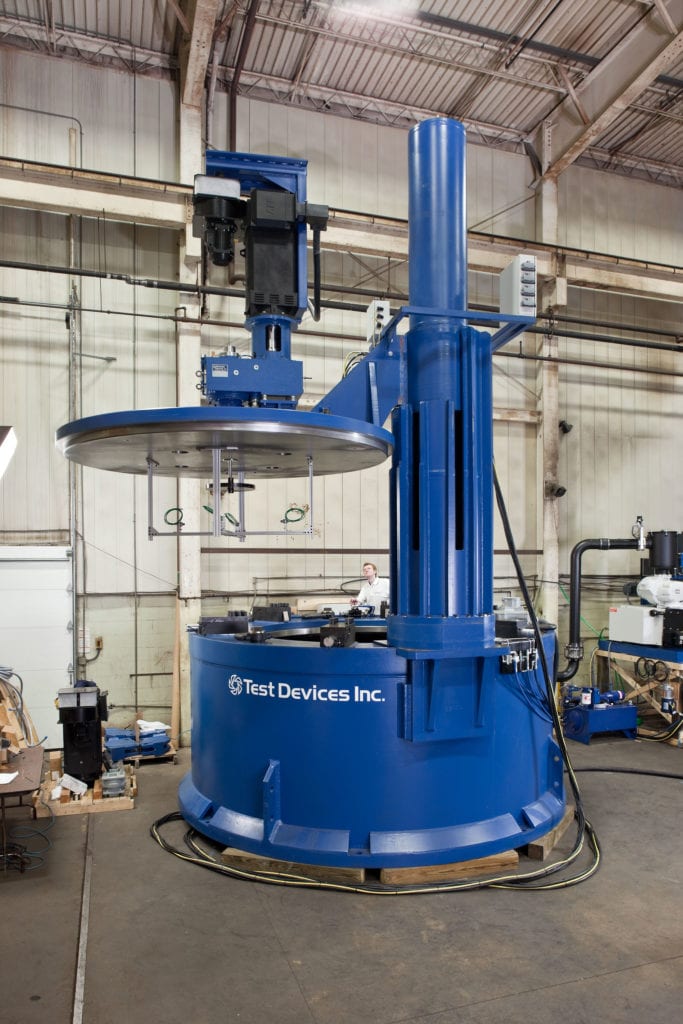
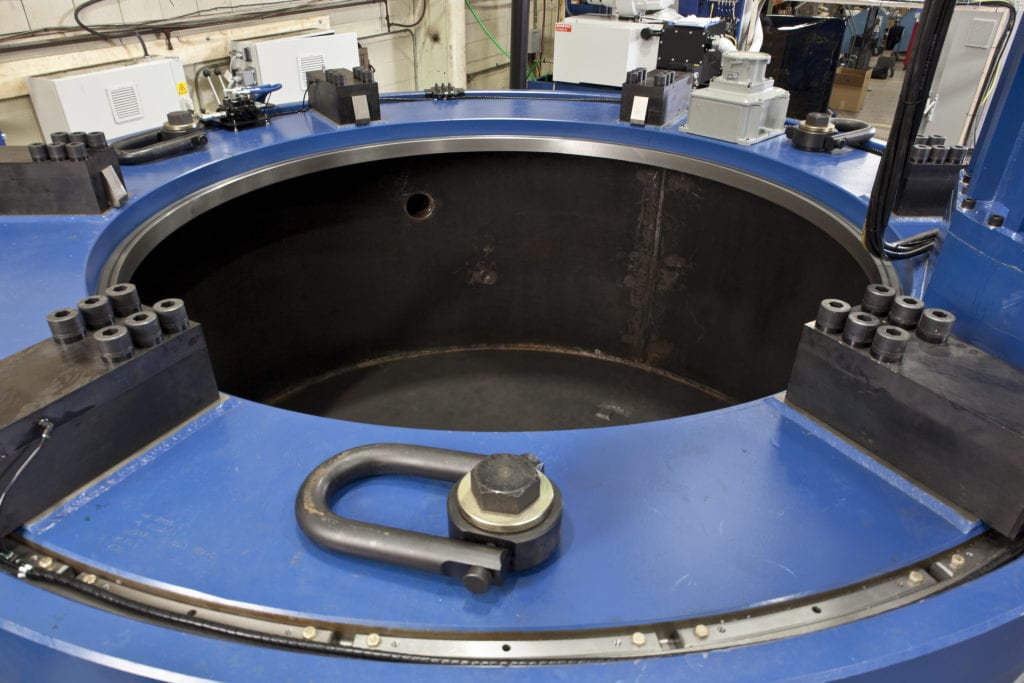
    At Test Devices, purpose-designed spin test systems are deployed in order to ensure that tests are performed accurately and designed to gather all of the data our clients need. Our spin pits have been specifically engineered to safely contain the rotor in case of unintended failure, as rotor failures lead to a high-energy explosion of lethal fragments.

    Proof testing sees use in many applications. Some of these include:

    • Jet engine forgings, disks, and bladed disks
    • Turbocharger impellers and turbine wheels
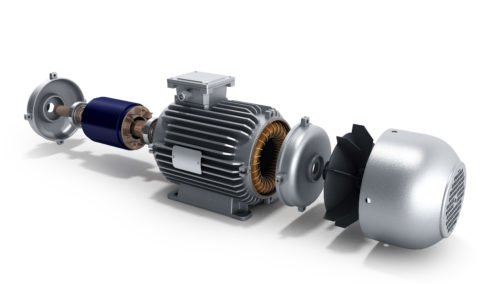
    • High speed electric motor rotors
    • Medical and industrial centrifuges
    • Rocket turbo-pump turbines
    • Energy storage flywheels

    Advantages of Proof Testing

    Proof testing as part of spin testing with Test Devices offers numerous advantages, including:

    Instrumentation and Data Measurement

    Traditional tests could only measure the rotational speed of test articles and prove that they were able to endure a given centrifugal load. Now, TDI offers a host of varied proof tests that can measure a much wider range of data. Organizations can now choose from simple, economical testing or more complex and data-intensive tests depending on the requirements of the application.

    When you work with TDI, we’re able to offer expertise in spin tooling, test setup design, and the state-of-the-art instrumentation. This means proof tests from us offer an exceptional value to clients. Our proof testing may include:

    • High-Speed Video Imaging
    • On-line Growth Measurement
    • Rotating Optical Strain System

    Purpose-Designed Spin Test System

    Spin testing can often lead to the damage of components involved in the tests. In some applications, such as forging overspeed tests, shaft vibrations from rotor imbalance can be severe enough to cause serious setbacks. TDI’s air and electric drives rely on a proprietary damper design in order to tolerate high levels of unbalance before permanent damage occurs.

    Our spin pits are also built in a modular fashion. This means they can accommodate varying levels of technology requirements for spin and R&D tests. PLC-based control systems mean that engineers and operators have the option of integrating a wealth of instrumentation and protocol options into their operations.

    We also feature the industry’s most robust motor burst containment systems. Over four decades of successful, safe spin tests afford us the ability to stand by our containment design.

    Proof/Overspeed Test in Production

    These tests rely on spinning a rotor forging past its yield limits before it goes through final machining. This means that centrifugal stress is applied to the rotor in order to preferentially yield certain areas and fashion material properties. This process also makes for an excellent opportunity to screen for bad rotors that present bursting risks. Rotors that make it through these tests offer performance enhancing material properties that a conventional process cannot.

    Proof/Overspeed Test for Verifying Integrity

    Proof-tested components are frequently accelerated beyond their operating speed in measures of around 120-150%. This speed is then held from seconds to several minutes depending on the testing standard, giving engineers the opportunity to inspect the design, material selection, and manufacturing of a component. Some more advanced proof tests also incorporate thermal gradient and other forms of environmental factors to capture the realistic test conditions.

    If you’re interested in seeing what a proof test can do for your organization, contact us today. Industry professionals will be glad to speak to you and work to meet your unique needs.

    spin-testing-for-manufacturing-101-cover

    Download Your Copy Here >>

  4. Digital Twin Technology and the Industrial Internet of Things

    Leave a Comment

    Recent advances in sensor technology, computational capacity, and data analytics have created more effective ways to monitor conditions in fielded machines. Additionally, advances in asset-management technology present both challenges and opportunities for engineering test service providers.

    Better Databases and Sensors Create a Digital Twin

    In the era of the Industrial Internet of Things (IIoT), machines now come equipped with sensors that continuously monitor them throughout their operating lives. Data from operating machines provide OEMs with valuable information on the performance and durability of their field equipment. In addition, manufacturers can further analyze data to derive insights and ideas for product improvement and innovations.

    Some leading OEMs envision that they’ll soon be able to continuously refine their equipment’s numerical modeling from field data, which will then create a perfect representation of the actual equipment in the field—they call the end result “The Digital Twin.” The Digital Twin will predict a given piece of equipment’s longevity and service needs to eliminate the threat of unexpected downtimes.

    The Future of Equipment Testing

    Rapid increases in the accessibility of field data as well as in Digital Twin technology pose a crucial question for engineering test service providers like Test Devices: What’s the future of equipment testing?
    While test service providers must recalibrate their approaches to allow for the growing role of emerging technologies, we believe that companies like ours will continue to play a critical role in contributing to the development and innovation of high-performance machines.

    Intense competition will continue to bolster demand and accelerate the pace for new technology development. This trend already prevails in many industries. For example, jet engines, whose development cycles used to take a decade or longer to complete, now are constructed in less than half that time.

    Perfecting New Designs in Real Time

    Although designers and engineers can greatly benefit from accumulated knowledge and past data, it can be hard to validate and analyze new designs as they’re being designed. This especially applies to new product designs that seek more than incremental improvements on previous versions, which inherently pushes the boundaries of know-hows and involved several decisions based on educated assumptions.

    In situations like these, testing can bridge the information gap between the past and the future builds. In the early design and development phase, manufacturers can benefit from representative tests that reflect the part’s functionality and operating environment. In this event, Test Devices helps plan unique ways to evaluate high-performance and high-speed rotors.

    This is just one example of how Test Devices adds more value to its tests while reducing costs.

    Other Updated Testing Techniques

    We at Test Devices are updating our procedures to provide the highest-quality equipment and product testing in today’s manufacturing environment. We provide a number of additional services depending on client needs.

    Historically, we used to perform spin testing on final products, i.e., disks or wheels straight from the manufacturing line. While this approach has its merits, we can solely test with highly representative specimens, which are only possible in the later stages of product development. However, the downside is that the need for a production level part for testing imposes higher costs and schedule pressure.

    To make up for this, we see more use of mini-disk type tests: With relevant purpose-designed geometries, materials and other effects of manufacturing processes. Planning a subscale test early enough in product development enables customers to eliminate some of the key design assumptions and experiment with different product builds.

    For example, in jet engine development work, new material types like disk superalloys are very expensive. They’re also only available in limited quantities, especially in the early developmental stages. Using small test specimens allows customers to afford multiple tests per specimen design, helping them validate some key statistical information to more fully characterize material capability.

    Test Devices is also investing in materializing subscale test capabilities. Our efforts focus on two key areas:

    1. Designing a test system that captures the most relevant test environment (for example, thermal gradient capabilities of more than 1,000°F per inch in the Highly Simulative Subscale Test [HSST] system)
    2. Enhancing our data measurement techniques, perfecting systems such as the Rotor Optical Strain System (ROSS) for full-field strain measurement

    Test for Success at Test Devices

    In the era of IIoT and Digital Twin, Test Devices will support our customers’ success through expeditious and high-fidelity test services that keep up with the fast pace of product development.

    If you would like to learn more about how our high-quality testing services will maximize your latest project’s potential, contact us today.

  5. Low Cycle Fatigue Testing and Crack Detection Systems

    Leave a Comment

    In a high-speed rotating machinery, comprehensive testing is required to ensure the rotor design integrity and durability. Fatigue in these parts – cracks that form due to cyclic load – may result in incipient component failure, causing malfunction or loss of operational critical machines, and in some cases may cause personal injury or death.

    Even if manufacturers do their very best to design flawless parts with sufficient fatigue resistance, validity of the analytical work must be tested in a representative condition for the component operating in a machine. Testing can help to provide the necessary and highly relevant data to refine the calculation for the component’s service life and maintenance requirements.

    Low Cycle Fatigue Testing

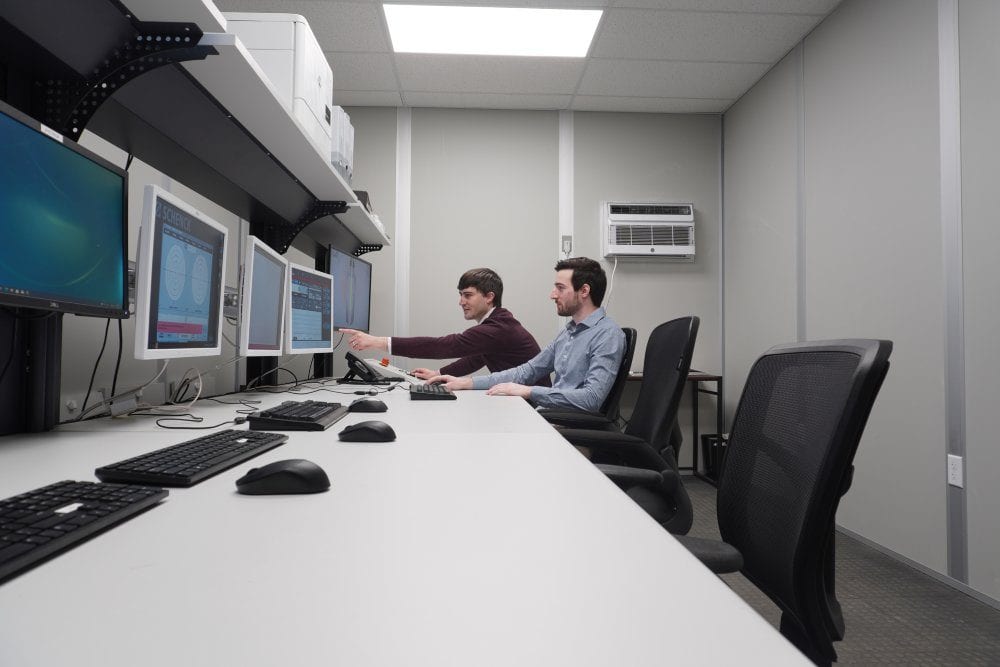
    Test Devices Inc Control RoomLow Cycle Fatigue (LCF) is a type of fatigue caused by cyclical recurring stresses, driven by speed changes in a rotating component during the machine operation. Takeoff and landing speeds in turbine engines are an excellent real-world example.
    In a high-tech machine, such as a jet engine, the design of the key functional parts (e.g. disks and blades) often requires very intricate geometry – which involves a careful balancing of its intended functionality with the structural stress profiles. Recurring load/stress in the rotor is known to typically initiate cracking in localized stress risers such as sharp corners or bolt holes.

    Fatigue is a probabilistic problem that involves a management of uncertainties. The durability of the rotor parts is known to be significantly affected by various factors ranging from differences in operating conditions of the machines, handling damage to the small variations in manufacturing operations, inherent material scatter in material properties and the presence of defects (presence of micro voids, impurity, inclusions etc.).

    LCF spin testing can provide critical data for validating and improving the fatigue damage model. Spin testing offers a test method which uses the size and geometrically representative test specimen (sometimes using the actual production parts) with the complex stress field generated by the CF load. Furthermore, by leveraging the TDI’s advanced LCF testing capabilities that combines elevated temperature environment (including thermal gradient), engineers can examine the component performance in a more realistic engine-like test environment.

    The applications for LCF testing are numerous, such as:

    • Jet engine rotors / Industrial gas turbine rotors
    • High-speed electric motor rotors
    • Turbochargers
    • Rocket pumps
    • Compressor rotors
    • Flywheels / Energy storage flywheels
    • High-speed fans
    • Centrifuge rotors
    • Material characterization

    Real-Time Crack Detection System

    At Test Devices, we use a Real-Time Crack Detection System (RT-CDS) to monitor the emergence of cracks in LCF tests. The RT-CDS system has a proven track record of 90%+ crack detection success rate. We originally developed and patented this technology in 2000 and have been refining its capabilities on an ongoing basis.

    The benefit of the RT-CDS is that the system allows us to interrupt the LCF test just as a crack initiates in the test rotor, preserving the test specimen in an ideal condition for the understanding the initiation site and onset of growth crack in the component. Being able to preserve the test rotor without bursting it also eliminates the task of post failure investigations, involving the laborious and painstaking process of piecing together the burst fragments of a test rotor.

    A high level of confidence in detecting the crack without bursting a rotor also allows us to plan and execute the LCF test with the minimum amount of interim inspections, significantly shortening the overall test schedule.

    The Value of Fatigue Testing with Test Devices, Inc.

    Fatigue damage in high-speed rotors and their components are important concerns that could result in catastrophic failures if not properly addressed. Fatigue testing is a crucial step in determining the durability and ultimate service life of a component. Test Devices, Inc. has extensive experience performing LCF testing for assessing rotor fatigue behavior with accuracy and in a safe test environment.

    TDI has developed purpose designed high-power drive systems that enable fast LCF cycling, which can operate 24-7 unattended. Combining these capabilities with the RT-CDS, TDI can offer high quality and expeditious LCF testing services. To ensure the fidelity of LCF test results, we review the test parameters and cycle profiles by using cycle auditing software.

    Our online data system records all tests, and data may be easily transferred, stored, and viewed. You may also choose to receive daily updates to stay up to speed on the progress of your project and learn more about the data that has been collected. At the completion of testing, you will receive a complete analysis and archived data access for future use.

    The combination of these test capabilities enables us to offer cutting-edge tests with the highest efficiency.

    For more information about Low Cycle Fatigue testing, our RT-CDS, or our other services, please contact us today.

  6. Test Devices 2018 Year in Review

    Leave a Comment

    2018 has been a banner year for Test Devices, with expansions in both our facilities and our services, allowing us to better serve our customers as a “dependable partner” and a convenient “one stop shop”. Some of our new and expanded service offerings include in-house machining, eDrive spin testing, and expanded balancing capabilities – thanks to the acquisition of a new Schenck balancing machine.

    Facility Updates 

    Test Devices’ latest facility upgrade brought significant improvements to our shipping and receiving departments and upgrades to our climate-controlled precision inspection room, which includes the expansion of our Quality Inspection team and the acquisition of a new larger CMM (coordinate measuring machine).

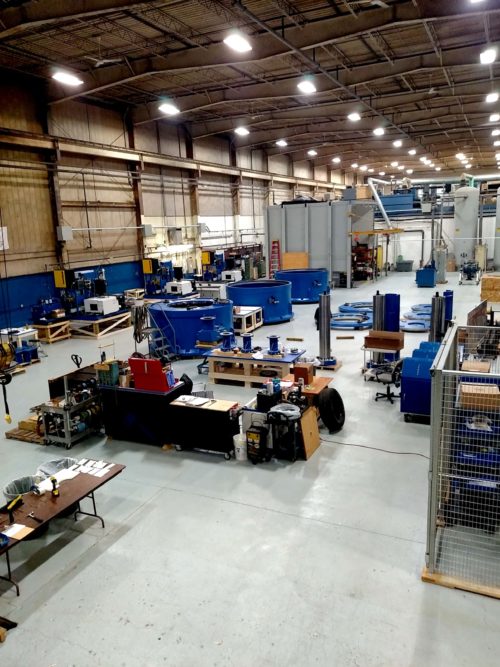
    The redesigned facility layout, added floor space, and new equipment allowed us to streamline our workflow and enables us to work more efficiently than ever before. The new shipping and receiving departments are now located to the front of the building with an expanded floor space, and optimally equipped handling areas with additional cranes and staged operations. This new layout minimizes unnecessary movement, creates easier access and an unobstructed flow of materials.

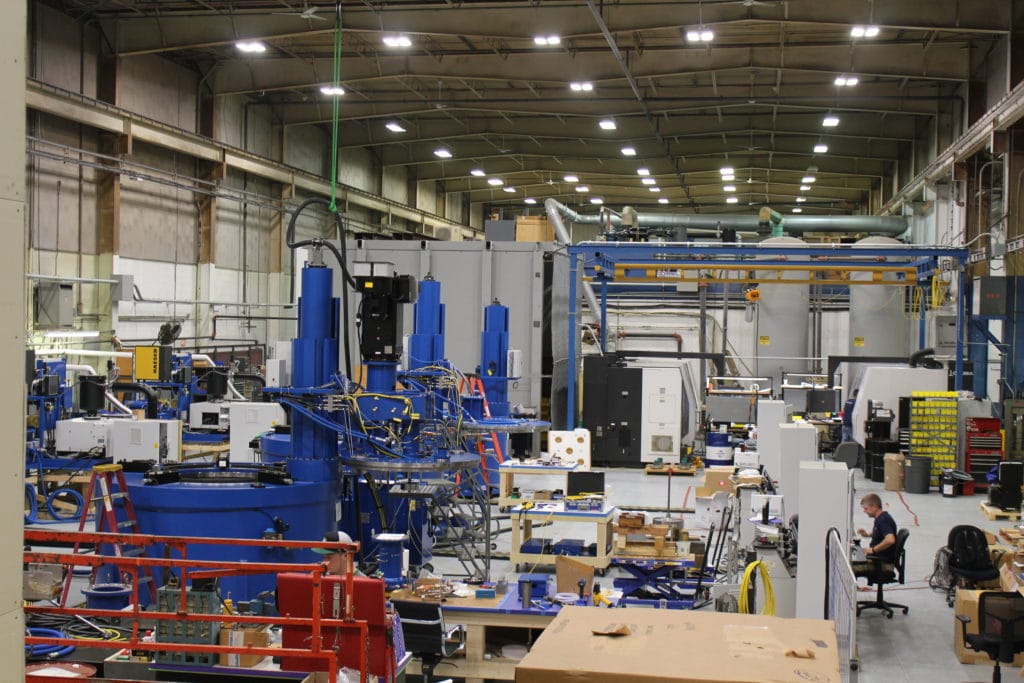
    We have also expanded our equipment build area and relocated it to a new section of our facility. This move allowed for a more efficient staging of equipment builds and assembly operations capable of preparing three to four machines simultaneously.

    Semi-Finish Machining

    As of June, Test Devices now offers in-house semi-finish machining services for aerospace turbine disks. For over a decade, TDI has served leading jet engine OEMs who require forging pre-spinning services—a vital part of producing nascent engine disks that offer the highest performance. While a seemingly simple process, this service is deeply specialized, demanding the highest knowledge and skill level to produce a seamless operation. This newly added machining capability will vertically integrate operational steps and allow TDI to offer more expeditious and higher quality services. By the end of 2018, TDI is on track to ship over 100 semi-finished forgings.

    Expanding Aerospace Grade Balancing Services

    In 2018, Test Devices grew our balancing capabilities by acquiring a new HM 20 Schenck Horizontal Balancing Machine to support the growing demand for these operations. This high precision, state-of-the-art machine allows TDI to service a broader range of customers with varying rotor balancing needs.

    Among the primary benefits of the HM 20 is its hard-mounted bearing design, ensuring rapid changeovers between rotors, which allows Test Devices handle significantly higher volumes of balancing jobs and increase the efficiency of our operational capabilities. The HM 20’s modular design also allows it to be easily modified.

    Growth in eDrive Spin Testing Systems

    The successful completion of an increasing number of proof and burst tests and 130,000 LCF cycles in 2018 attests to the growing demand for eDrive testing.

    We are continuing to enhance our testing and engineering offerings to support eDrive customers in 2018, including advanced rotor growth mapping, high-resolution, high-speed video imaging, expedited fatigue, LCF tests (with RT-CDS and growth mapping), heated spin tests, unbalance budgeting and rotor design engineering support.

    Download Your Copy Now >>

    2019 and Beyond

    Test Devices Inc. continues to build our services and capabilities in 2019 and we look forward to offering better services for new and existing clients in the aerospace, automotive, and other highly technical industries. We will keep leading the industry by offering the latest services and technology.

    To learn how our spin testing, balancing, and other services can help your R&D efforts, prototyping, or manufacturing operation, contact us or request a quote.

  7. What Is Dynamic Spin Testing?

    Leave a Comment

    Jet engine and gas turbine designers must understand the dynamic behavior of bladed rotors and devise a means to manage their resonant vibrations. The dynamic behavior of bladed rotor can be very complex and could result in incipient fatigue failures. The blade vibrations can be influenced by several variables, including its geometry, manufacturing tolerances, material, attachment and damping methods to name a few. The presence of foreign object damage and erosion can also significantly affect the fatigue durability and integrity of the blades. In some cases, a small change made during repair can cause unanticipated mechanical reactions.

    Designing a robust bladed rotor system requires a careful understanding of the interaction between the various factors that influence the blade dynamic behavior and its structural integrity. Turbine blade failure is a serious safety issue that can be evaluated through Dynamic Spin Testing and High Cycle Fatigue testing.

    Test Devices’ Solution

    Test Devices, Inc. has developed and refined a unique approach to test and study the dynamic behavior of bladed rotors. Our Dynamic Spin™ Testing allows the testing of a fully assembled bladed disk. The spin test-based method combines the effect of centrifugal load with the vibratory excitation on the blades. The ability to test the full-size parts with the CF load simulates a realistic test condition, especially at the blade attachment area where the detail of the intricate geometry and the interactions of the parts have profound impact on the efficacy of the damping as well as the parts’ life.

    Test Devices has developed proprietary blade excitation techniques and the technology to accurately control the rotational speed of a test rotor, enabling us to target specific resonant frequencies at different engine orders. With these technologies, Test Devices offers a means to establish what vibratory responses can be expected and study the damage mechanisms that affect the durability and the integrity of the parts.

    What Is Dynamic Spin Rig?

    Test Devices has pioneered the Dynamic Spin Rig (DSR) to accomplish practical, next-generation testing—a patented technology that has been developing since 2004.

    The DSR is a spin test system that can simulate the realistic operational environment of a jet engine’s bladed rotors. Fully accounting for real-world conditions including the use of actual components, blade-rotor attachment mechanisms, damper systems, centrifugal loading and the relevant dynamic excitation load at a targeted engine order.

    DSR is a useful tool for jet engine designers and engineers to study, measure data and validate:

    • Blade resonance frequency & dynamic responses
    • Campbell diagrams and FEA models
    • Blade deflection and strain
    • High Cycle Fatigue (HCF) life validation
    • Wear damage/the efficiency of anti-friction coatings
    • The effects of mistuning
    • Blade resonance changes due to a crack or repair

    Trusted Team in Dynamic Spin Testing

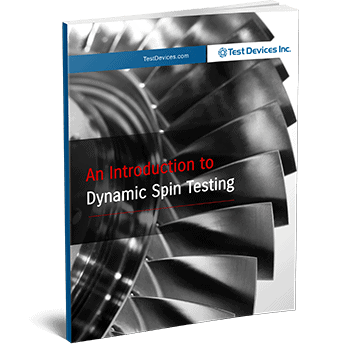
    The safety and reliability of components that go into jet engines and gas turbine rotors are important to us at Test Devices. We offer our test solutions and engineering testing expertise to tackle even the most challenging requirements. To learn more about our processes and equipment, download our eBook, An Introduction to Dynamic Spin Testing, or contact us today.

    Download Your Copy Now >>

  8. Spin Testing for eDrive Components

    Leave a Comment

    Propelled by political, technological, and economic factors, growing global demand for electric vehicles (EV) has accelerated the pace of development of eDrive systems. Automotive part suppliers are developing an increasing number of sizes and varieties of eDrive systems to meet the rising number of EV models offered by all major automotive manufacturers across the international market. This development and validation of reliable electric motors is a critical part of the eDrive system.

    Offering a full range of spin testing services (outlined below) to meet clients’ developmental testing needs, Test Devices is an integral partner to our eDrive spin testing customers.

    As part of a developmental test program for a major eDrive manufacturer, we recently concluded 50,000+ heated cycles on a series of electric motor rotors in an effort to verify cyclic fatigue life. In addition to cyclic fatigue testing, the test program also involved a series of overspeed and burst tests to validate structural integrity.

    Spin Testing from Test Devices, Inc.

    With an eye on quality services and constant innovation across everything we do, our Test Devices team consistently strives to provide timely and efficient services to better meet our customers’ needs. An industry-leading provider of spin testing and balancing services, we look forward to working with customers developing eDrive systems.

    Download Your Copy Now >>

    For more information on our eDrive spin testing services, or to discuss how we can help with your specific testing needs, contact the team today. We’re on hand to answer any questions you may have.

  9. TDI On Track for Growth in eDrive Spin Testing Systems

    Leave a Comment

    As the race for improved electric drives for electric vehicles, drones, and hybrid drive/propulsion systems accelerates, the need for testing of rotors used in high-speed electric motors is also on track for growth.

    Test Devices Inc. (TDI) is pleased to begin offering detailed rotor growth testing as well as a variety of other types of spin tests and expert services to aid in the accelerated development of your high-speed eDrive motors.

    Why Spin Test with Test Devices Inc?

    The engineering challenges faced by the high-speed electric motor industry parallel those of the jet engine industry. The need to understand rotor stresses and expansion behavior in order to accurately engineer reliable and dependable machines is a problem both sectors face. For more than 40 years, TDI has played an important role in helping industry-leading aerospace companies devise the proper tests required to study and better understand the growth of turbines and compressor disks.

    In tandem with detailed rotor growth testing, additional spin test options and expert support may also assist in the development of your high-speed motors:

    • Detailed rotor growth mapping

    This advanced growth measurement technique developed by Schenck is now available at TDI. This method maps the detailed contour of high-speed rotors, accurately capturing variations in a rotor’s geometry as it deforms under spinning conditions. See Figure-1 above for an example.

    • Burst test and high-speed video imaging

    These tests enhance understanding of the failure limit and failure mode of the rotor. Accurate growth measurement and high-speed video data helps engineers calculate the structural stability of the rotor and its failure mode.

    • Fatigue, LCF test (with RT-CDS and growth mapping)

    Fatigue and Low Cycle Fatigue (LCF) tests are useful in studying operational cycle fatigue and rotor durability. TDI’s proprietary Real-Time Crack Detection System (RT-CDS) immediately detects fatigue cracks as they happen and halts the test to preserve the damaged rotor before it disintegrates. RT-CDS enables customers to know the exact location and timing of fatigue damage, alleviating the need for painstaking failure investigation work.

    • Heated spin test

    Thermal management is one of the key concerns in high-speed motor designs. Operating temperature affects material strength as well as the size of the air gap necessary for cooling airflow and accommodating rotor growth due to thermal expansion. Depending on the materials used to construct the rotors, their behavior may vary dramatically when operated at room temperature versus an elevated temperature.

    • Imbalance budgeting

    TDI offers an expert design analysis service to estimate the range of imbalance levels presented by a given rotor design. This process involves analyzing the effect of the geometric tolerances of a given part and then estimating the influence on the imbalance of the rotor using a mathematical model to simulate the manufacturing process, while also comparing it to more than 10,000 different combinations of tolerance variations. The output from this analysis provides a probability model of the imbalance in the rotor, which can then be used to tune the design, minimize scatter, and avoid surprises at later stages of your fabrication processes.

    Learn More

    The recent merger of Test Devices Inc. (TDI) and Schenck Corporation combines the expertise of two of the most advanced leaders in spin testing, balancing, and high-speed rotor engineering. Download our eBook to learn more about why spin testing matters for eDrive systems.

    Download Your Copy Now >>

    To learn how our spin tests and other services can help your R&D efforts, prototyping, or manufacturing operation, contact us or request a quote.

  10. TDI Expanding Balancing Services with New Schenck Machine

    Leave a Comment

    For the past four decades, Test Devices Inc. has provided our customers with an extensive range of rotational services, including balancing troubleshooting, diagnostics, and calibration. In an effort to meet growing consumer demands and reinforce our commitment to providing the best and most accurate rotor balancing services, we are expanding our balancing capabilities by acquiring a new HM 20 Schenck Horizontal Balancing Machine to support our existing fleet of equipment.

    This state-of-the-art machine represents the latest in rotor balancing technology. One of the main benefits of the HM 20 is its hard mounted bearing design, which ensures rapid changeovers between rotors. This feature gives us the ability to handle significantly higher volumes of balancing jobs and increase the efficiency of our operational capabilities.

    Additionally, the HM 20 is easily modifiable due to its modular design. A wide range of components and attachments can be added to the unit, increasing its flexibility and allowing us to meet the unique demands of customers regardless of industry or application.

    Why Balancing Matters

    Rotor balancing is essential to ensure the even distribution of mass in rotating components. Unbalance due to eccentricities between the center of gravity of the rotor and the axis of rotation causes the heavier side of the rotor to exert more centrifugal load. The unbalance in the rotor ultimately leads to excessive noise, vibration, wear, and significantly reduced service life. In some applications, unbalanced rotors are even considered to be a safety hazard if machinery failure can result in personal injury or property damage.

    Balancing Services at TDI

    At Test Devices Inc., we offer a broad range of timely and cost-effective balancing of virtually any size rotor. Our advanced equipment (including our newly acquired HM 20 Schenck Horizontal Balancing Machine) is capable of providing balancing services for the most complex parts the aerospace industry.

    Our services also include the design and manufacture of customized balance tooling for the production of unique and precisely balanced components.

    Our staff of highly qualified and experienced industry experts, engineers, technicians, and consultants have provided rotary and balancing solutions in hundreds of challenging applications for many world-renowned clients. As a partner to Schenck, the experts in balancing, we are able to leverage their advanced technology and knowledge base with specific expertise and software support focused on the requirements most important to the aerospace industry. We also work closely with our customers, analyzing each specific case to determine the best methods and strategies for balancing.

    Learn More

    Proper balancing of rotors and other rotating components are essential to ensuring the efficiency, longevity, and safety of your machinery or equipment. Furthermore, balancing can have the added benefit of reduced maintenance, which can eliminate the costs associated with frequent repairs and part replacement.

    Although the diagnosis of an imbalanced part is relatively simple, careful selection of a balancing service provider is crucial to guarantee optimum results. At Test Devices Inc., our technical staff have seen it all and are willing to assist you with your balancing needs.

    Download Our Balancing 101 eBook

    If you would like to learn more about the risks of improper balancing and how you can avoid them, download our comprehensive eBook, Balancing 101, or contact our team today.

Have any questions?

Click Here
X